





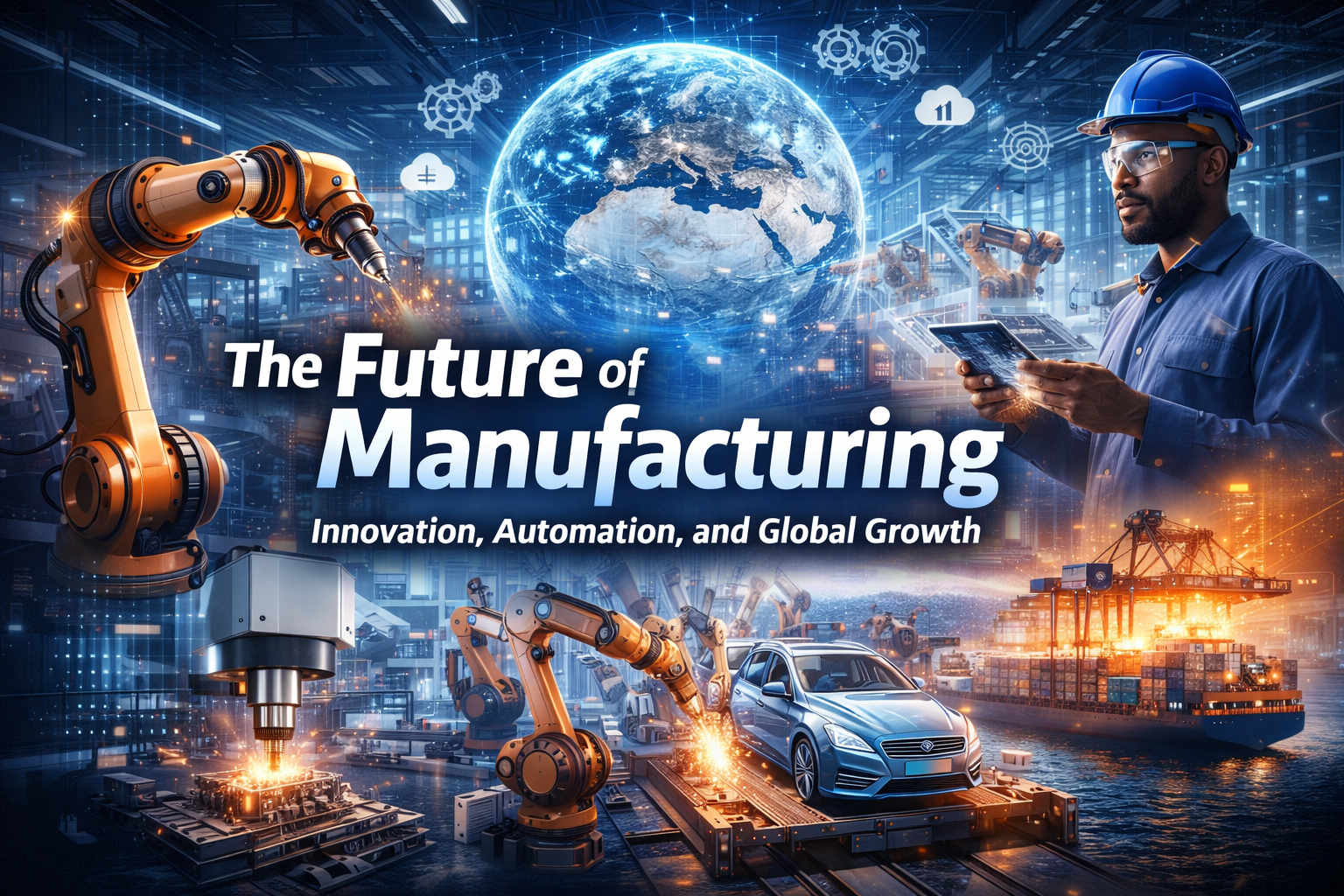
Manufacturing has always been one of the most important pillars of economic development. From producing everyday household products to building advanced machinery and technology, the manufacturing industry drives innovation, job creation, and global trade. In recent years, the sector has been undergoing a significant transformation as companies adopt new technologies, improve efficiency, and focus on sustainability.
Today, manufacturing is no longer limited to traditional factory processes. It has evolved into a modern, technology-driven ecosystem where automation, artificial intelligence, and smart systems play a key role in improving productivity and product quality.
The Evolution of Modern Manufacturing
Over the past few decades, manufacturing has shifted from manual production methods to highly automated and data-driven processes. Modern factories now use advanced machinery, robotics, and digital monitoring systems to streamline operations and reduce errors.
One of the biggest trends shaping the industry is Industry 4.0, which integrates digital technologies into manufacturing processes. This includes smart sensors, data analytics, and interconnected machines that communicate with each other in real time. These technologies help manufacturers monitor production lines, detect potential issues early, and optimize performance.
With these advancements, companies can produce goods faster while maintaining consistent quality.
Automation and Robotics in Manufacturing
Automation is becoming a key driver of manufacturing efficiency. Robots and automated systems can perform repetitive tasks with high precision, reducing human error and improving productivity.
Manufacturers across industries are adopting robotic arms, automated assembly lines, and AI-powered quality inspection systems. These technologies allow businesses to handle large production volumes while maintaining strict quality standards.
Automation also helps improve workplace safety by handling dangerous tasks that could pose risks to workers. Instead of replacing human jobs completely, automation often shifts workers into more skilled roles such as system monitoring, programming, and technical maintenance.
The Role of Artificial Intelligence
Artificial intelligence is increasingly becoming part of manufacturing operations. AI can analyze large amounts of production data to identify patterns, predict equipment failures, and improve decision-making.
For example, predictive maintenance powered by AI can detect early signs of machine wear and tear. This allows manufacturers to repair equipment before it breaks down, preventing costly production delays.
AI is also used for supply chain optimization. By analyzing market demand, transportation logistics, and raw material availability, manufacturers can plan production more efficiently and reduce waste.
Sustainability in Manufacturing
Environmental sustainability has become a major focus for manufacturing companies worldwide. As industries expand, the need to reduce pollution, energy consumption, and waste has become more urgent.
Many manufacturers are now adopting eco-friendly production practices. This includes using renewable energy sources, recycling materials, and designing products that generate less environmental impact.
Sustainable manufacturing not only benefits the environment but also helps companies build stronger brand reputations and meet global regulatory standards.
Smart Factories and Digital Transformation
The concept of smart factories is revolutionizing the manufacturing sector. A smart factory uses interconnected devices, cloud computing, and real-time data analysis to manage operations more effectively.
In a smart factory, machines can communicate with each other to adjust production speeds, detect defects, and improve efficiency without constant human supervision.
Digital transformation also enables manufacturers to track supply chains more accurately. With real-time data insights, businesses can respond quickly to market changes and customer demands.
Global Manufacturing Growth
Manufacturing remains a key contributor to economic growth in many countries. Nations around the world are investing heavily in industrial infrastructure to strengthen their manufacturing capabilities.
Emerging economies are becoming major manufacturing hubs due to lower production costs, skilled labor, and supportive government policies. At the same time, developed countries are focusing on high-tech manufacturing sectors such as aerospace, electronics, and advanced machinery.
Global trade has also expanded opportunities for manufacturers to reach international markets. Companies that adapt to digital technologies and efficient production systems are better positioned to compete globally.
Challenges Facing the Industry
Despite its growth, the manufacturing sector faces several challenges. Supply chain disruptions, rising raw material costs, and skilled labor shortages are some of the issues manufacturers must address.
In addition, rapid technological changes require companies to continuously invest in new equipment and workforce training. Businesses that fail to adapt may struggle to remain competitive in the evolving market.
The Future of Manufacturing
The future of manufacturing will likely be defined by innovation and technological advancement. Automation, artificial intelligence, and digital connectivity will continue to reshape how products are designed, produced, and delivered.
Manufacturers that embrace smart technologies, sustainability, and efficient supply chains will have a strong advantage in the global market. As the industry evolves, it will continue to play a vital role in shaping economic growth, technological progress, and modern society.
In conclusion, manufacturing is entering a new era where technology and innovation are transforming traditional production methods. With the right strategies and investments, the industry is set to become more efficient, sustainable, and globally connected than ever before.
