




Latest India News April 2026: Key Updates on LPG Prices, Banking, Markets & Exams
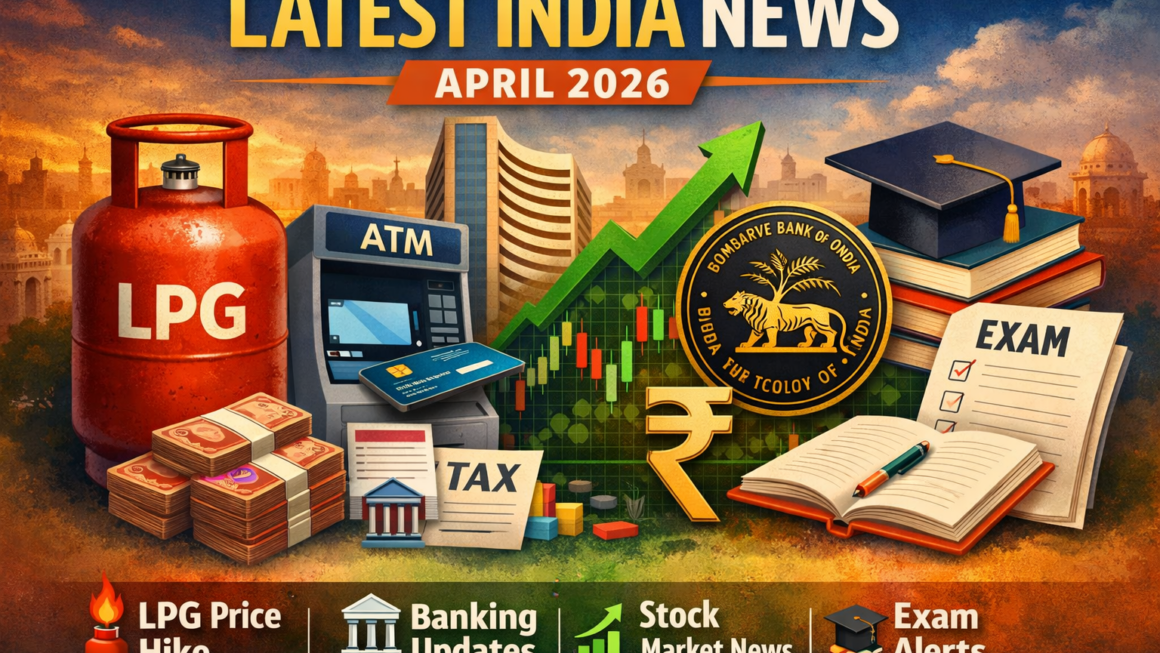
India has entered the new financial year (FY 2026–27) with several major developments impacting daily life, from rising LPG prices to banking rule changes and market movements. Here’s a comprehensive breakdown of the latest updates in April 2026.
LPG Prices Surge: What It Means for Consumers & Businesses
Commercial LPG Gets Costlier
One of the biggest updates this month is the sharp increase in commercial LPG cylinder prices. As of April 1, 2026, the price of a 19 kg commercial LPG cylinder has increased by ₹195.50, reaching around ₹2,078.50 in Delhi.
This hike is largely driven by rising global crude oil prices and geopolitical tensions in West Asia, which have disrupted supply chains.
Domestic LPG Prices Remain Stable
In contrast, domestic LPG prices have not changed and remain around ₹913 for a 14.2 kg cylinder in major cities.
Impact on Daily Life
- Restaurants and food businesses may increase prices
- Small businesses relying on LPG will face higher costs
- Inflationary pressure may rise in food and services
Experts warn that continued supply disruptions could further impact fuel pricing in the coming months.
Banking & Financial Rule Changes from April 1, 2026
Major Banking Updates
Several important financial and banking rules have changed with the start of the new financial year:
- ATM withdrawal limits revised for some banks
- Changes in credit card cashback policies (especially SBI cards)
- New two-factor authentication rules for ATM transactions
- FASTag annual pass fee increased
PAN & Tax System Changes
- PAN details will now be aligned strictly with Aadhaar
- New Income Tax Act rules come into effect
- Updated tax forms and filing deadlines introduced
Bank Holidays in April
Banks will remain closed on multiple dates due to regional festivals and public holidays, although digital banking services will remain functional.
Stock Market & Economic Updates
Government Borrowing & Bond Market
The Indian government plans to borrow approximately ₹8.2 trillion in the first half of FY 2026 to manage fiscal needs and stabilize markets.
This move aims to:
- Control inflation risks
- Manage fiscal deficit
- Maintain liquidity in financial markets
RBI Interest Rate Outlook
The Reserve Bank of India (RBI) is expected to keep interest rates steady at around 5.25% amid stable inflation and strong economic growth projections.
Rising Global Risks
Global geopolitical tensions, especially in West Asia, continue to influence:
- Oil prices
- Inflation trends
- Currency stability
India’s economy remains resilient but cautious in the face of external shocks.
Exams & Education Updates (April 2026)
Key Exam Season Begins
April marks a crucial period for students across India:
- Board exam results (CBSE, state boards) expected soon
- Competitive exam cycles (JEE, NEET, CUET) intensifying
- University admissions processes to begin shortly
What Students Should Focus On
- Stay updated with official announcements
- Prepare documents for admissions
- Monitor exam result portals regularly
With increasing competition, timely preparation and awareness are essential for success.
Cost of Living & Consumer Impact
What’s Getting Expensive?
From April 2026, several everyday expenses are expected to rise:
- Commercial LPG (major hike)
- ATM transaction charges
- FASTag fees
- Certain banking services
What Remains Stable?
- Domestic LPG prices (for now)
- Petrol and diesel prices remain largely stable despite global volatility
Conclusion
April 2026 brings significant economic and policy changes in India, impacting households, businesses, and students alike. While LPG price hikes and banking rule changes may increase the cost of living, stable fuel prices and steady interest rates provide some relief.
Staying informed and adapting to these changes will be key for individuals and businesses navigating the new financial year.