




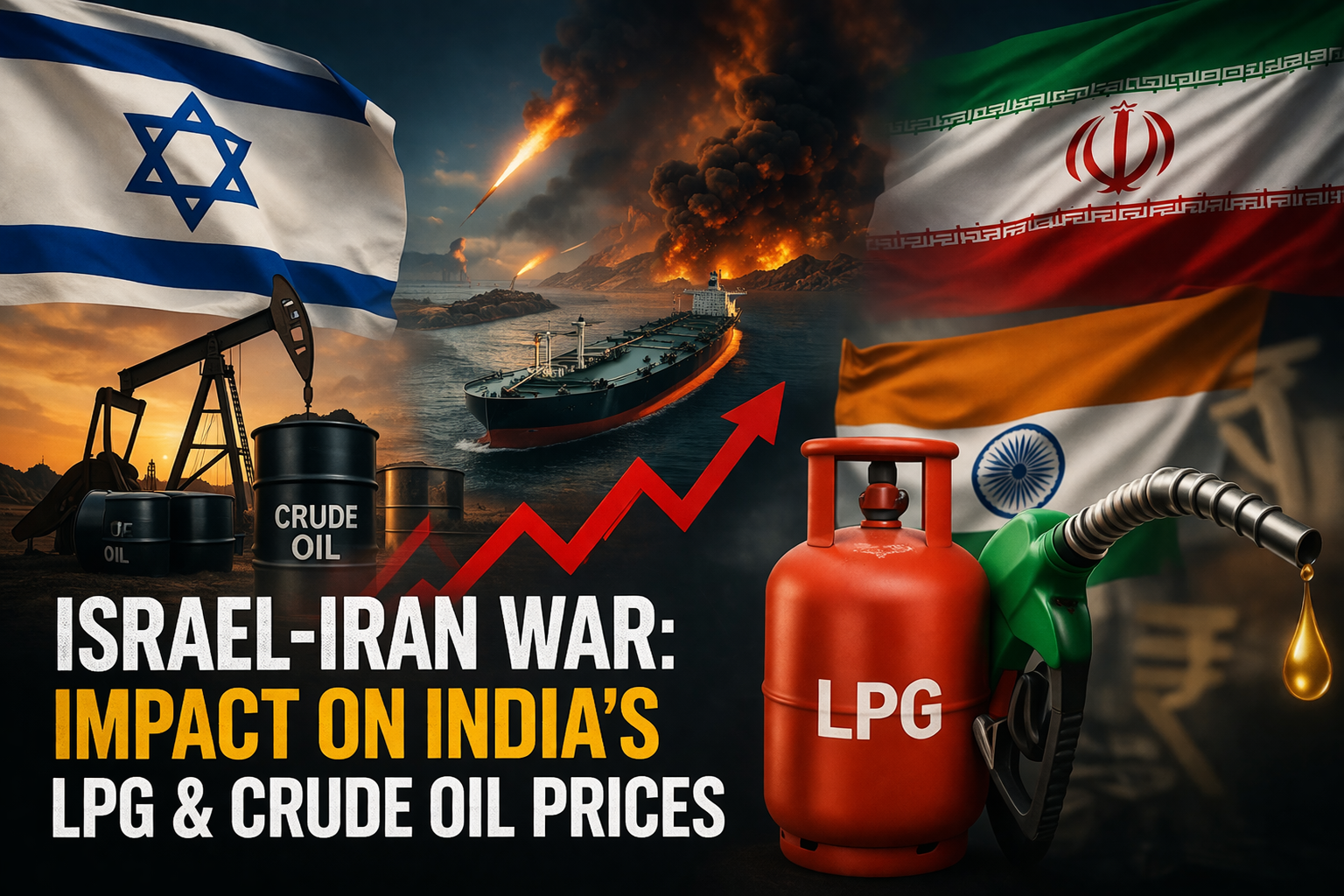
The ongoing geopolitical conflict between Israel and Iran has rapidly escalated into a global economic concern. While the war is centered in the Middle East, its ripple effects are being felt strongly in countries like India—especially in the energy sector. From crude oil price spikes to rising LPG costs, the consequences are becoming increasingly visible in everyday life.
Latest Developments Driving Oil Prices
Recent reports highlight a sharp surge in global oil prices due to disruptions in supply chains. One of the biggest concerns is the Strait of Hormuz, a critical maritime route through which nearly 20% of the world’s oil and gas supply passes. Any instability in this region directly impacts global energy markets.
According to recent news, oil prices have surged significantly since the conflict intensified, with forecasts rising sharply due to fears of supply shortages.
Additionally, attacks on oil tankers and new restrictions in the Strait of Hormuz have further strained global supply chains.
This combination of geopolitical risk and supply disruption is pushing crude oil prices higher—and India is directly affected.
Why India Is Highly Vulnerable
India imports over 85% of its crude oil requirements, making it one of the most energy-dependent economies in the world.
A significant portion of these imports passes through the Strait of Hormuz, making the country extremely sensitive to disruptions in that region.
Even a small increase in global crude prices has a major financial impact. Experts estimate that every $1 rise in crude oil can add billions to India’s import bill.
Impact on Crude Oil Prices in India
As global crude prices rise, India faces multiple challenges:
- Increased fuel costs (petrol and diesel)
- Higher transportation expenses
- Rising inflation across sectors
The conflict has already pushed crude prices upward, and analysts warn that continued escalation could worsen the situation further.
This creates pressure not only on consumers but also on industries like aviation, logistics, and manufacturing.
LPG Prices and Household Impact
One of the most immediate effects of the war is being felt in household kitchens through LPG prices.
India relies heavily on LPG imports, and disruptions in global supply chains are pushing prices upward.
Key impacts include:
- Increase in domestic LPG cylinder prices
- Higher subsidy burden on the government
- Rising monthly expenses for households
For middle-class and lower-income families, this can significantly affect daily budgets, making basic cooking fuel more expensive.
Government Response and Strategy
The Indian government has taken proactive steps to manage the crisis:
- Diversifying oil import sources (from 27 to 41 countries)
- Accelerating new crude and LPG import deals
- Monitoring fuel availability and pricing closely
Officials have also assured that there is no immediate shortage of fuel and that steps are being taken to ensure affordability.
Economic Ripple Effects
The impact of the Israel–Iran war extends beyond fuel prices:
1. Inflation Pressure
Higher fuel costs lead to increased prices for goods and services, contributing to inflation.
2. Rupee Weakness
Rising import bills can weaken the Indian rupee, affecting overall economic stability.
3. Market Volatility
Stock markets often react negatively to geopolitical tensions, especially when crude prices rise.
4. Business Impact
Industries dependent on fuel—like airlines, logistics, and chemicals—face rising operational costs.
What Could Happen Next?
The future impact depends on how the conflict evolves:
- Short-term scenario: Temporary price spikes with manageable supply
- Worst-case scenario: Prolonged conflict leading to severe oil shortages and price surges
- Stabilization scenario: Diplomatic resolution easing global markets
Experts warn that if the Strait of Hormuz faces long-term disruption, oil prices could rise dramatically, impacting economies worldwide.
Conclusion
The Israel–Iran war is not just a regional conflict—it is a global economic trigger. For India, the biggest concern lies in energy security. Rising crude oil prices and increasing LPG costs are already affecting households, businesses, and the overall economy.
While the government is taking steps to mitigate the impact, India’s heavy dependence on imported energy makes it vulnerable to such geopolitical shocks. As the situation unfolds, both policymakers and consumers must prepare for continued volatility in fuel prices.
